
 ქართული
 Русский
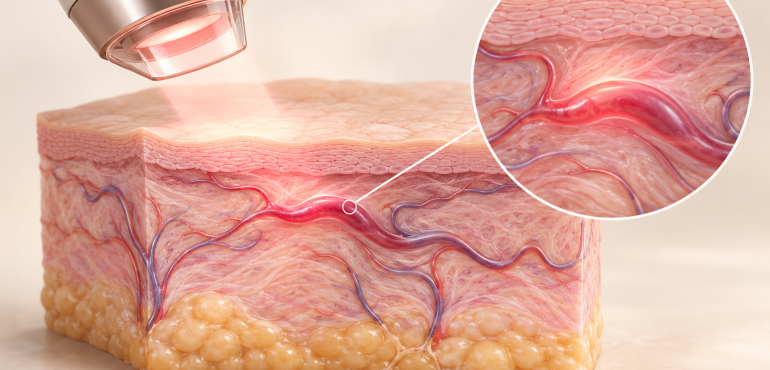
How are lasers used for visible blood vessels?
Sources reviewed: 25 October 2026.
Reading time: 2 min.
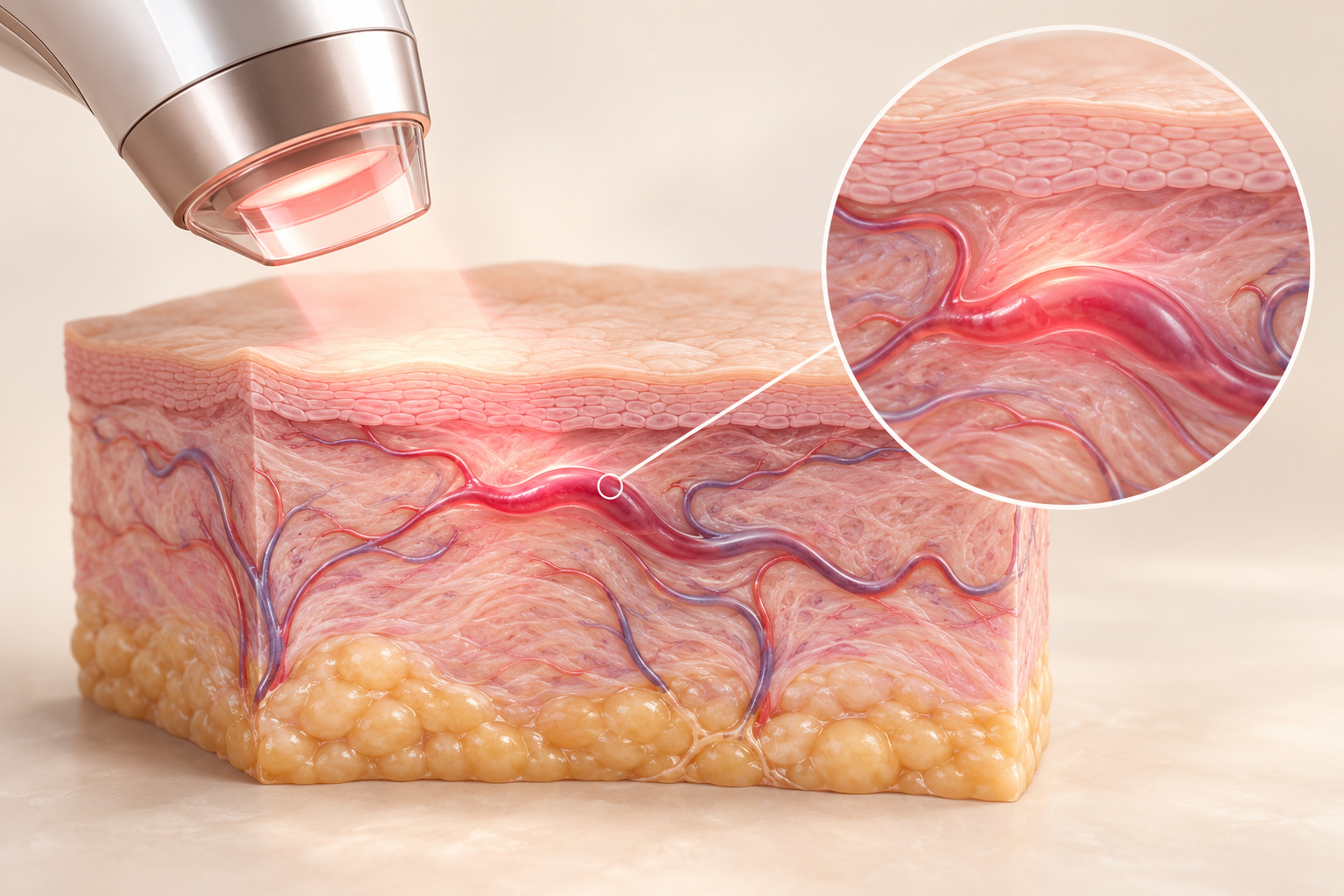
What does the light target?
Haemoglobin in blood is an important light target when treating visible facial vessels. EADV describes heat generation in selected vessels by lasers and IPL. Seeing one colour on the skin does not establish that the same device suits every lesion.
Source: EADV: Facial telangiectasia laser and light procedures
Which technologies does a clinical guideline discuss?
The British Association of Dermatologists’ rosacea guideline considers pulsed dye laser, Nd:YAG or IPL for persistent facial redness. These are options for individual assessment, not identical choices for every patient. IPL is not a laser, although it may be used for the same concern.
Source: British Association of Dermatologists rosacea guideline, 2021
Does reducing a vessel mean curing rosacea?
NIH patient information notes that laser treatment addresses rosacea’s symptoms, not its causes. Visible improvement therefore does not resolve every aspect of disease management. Discuss treatment goals and ongoing care with a doctor instead of calling a change in redness a complete cure.
Source: NIH: Relieving rosacea
What safety matters should be discussed?
EADV describes temporary swelling and possible pigment changes; eye protection is essential.
Source: EADV: Facial telangiectasia laser and light procedures
How do we distinguish general redness from a specific target?
Describe what you notice and what concerns you, but do not select your own diagnosis from a photograph. Ask the doctor what has been assessed and why a particular light source is being considered. An article on small facial vessels should not automatically be extended to every leg-vein problem. Clarifying the condition comes before choosing the device.
What should an outcome promise specify?
A clear explanation distinguishes assessment of visible vessels, diffuse redness and personal discomfort. Ask what the practitioner considers success and how it will be checked. “Removes vessels” does not describe potential limitations. The photographs and research accompanying an offer should concern the same problem you are discussing.