
 ქართული
 Русский
What is cold plasma, and what does wound research not prove?
Sources reviewed: 25 October 2026.
Reading time: 2 min.
What does plasma mean here?
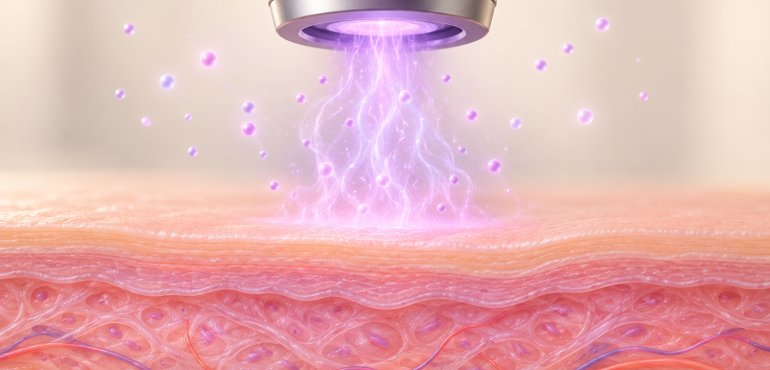
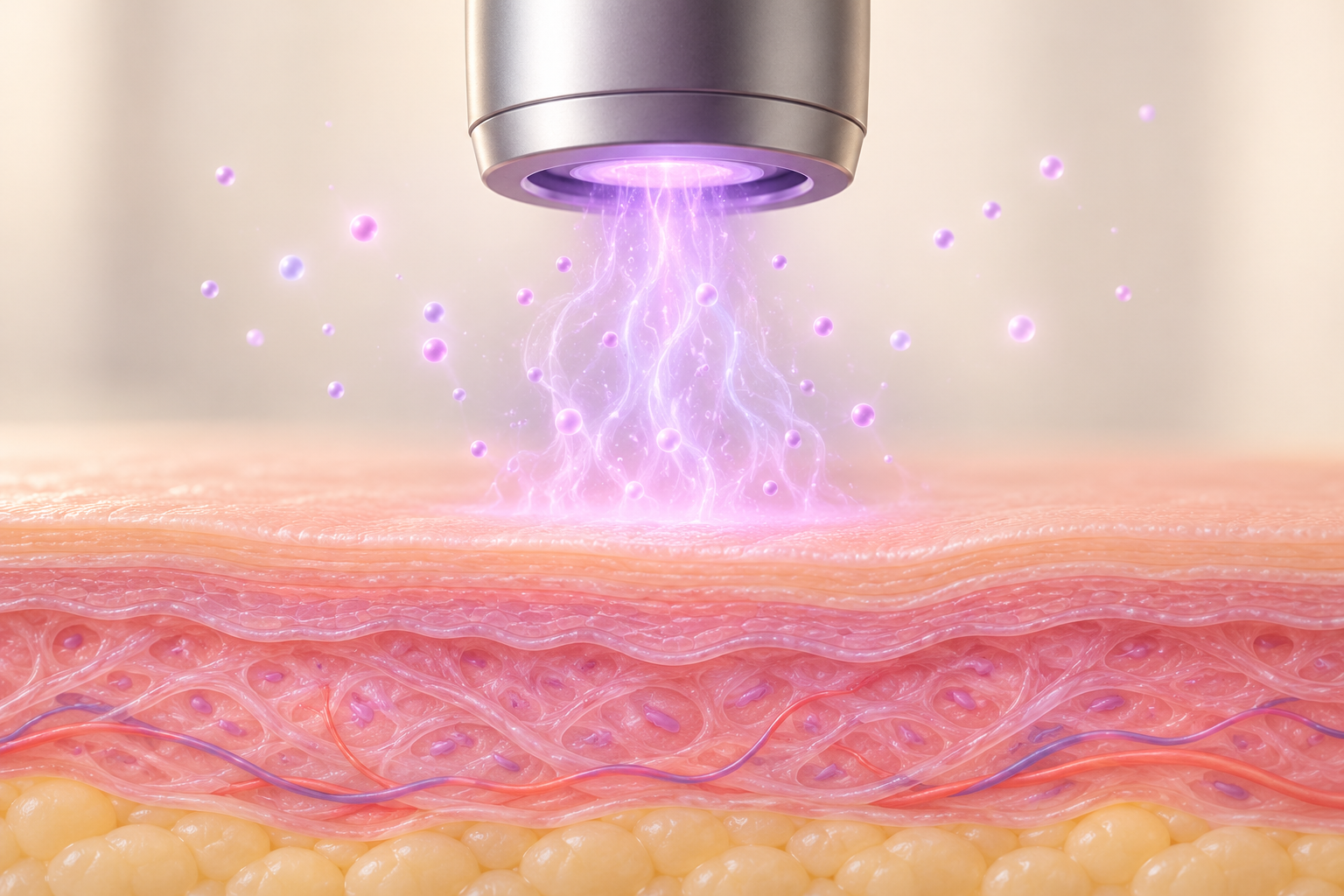
Here, plasma means ionized gas, not blood plasma. Research systems generate reactive species through interactions between gas and energy. The exact composition depends on the device.
Source: Cold atmospheric plasma: original helium-gas clinical trial
What was studied in a medical trial?
One randomized trial used an argon cold atmospheric plasma device alongside standard care for diabetic foot ulcers. Wound-reduction measures improved, but changes in infection and microbial burden did not differ significantly between groups. This investigated particular wounds and a particular device, not a cosmetic pen.
Source: Cold atmospheric plasma versus placebo in diabetic foot ulcers
What does newer research add?
An open-label randomized trial published in 2026 added helium plasma to standard care in 50 patients. The authors reported better short-term wound and bacterial-burden measures. The open design and brief follow-up limit interpretation; this does not establish facial lifting or the effectiveness of every device marketed as “cold plasma.”
Source: Cold atmospheric plasma in diabetic foot ulcers, 2026
Is a plasma pen the same thing?
Health Canada describes plasma pens as devices producing controlled burns and warns about burns, eye injury, infection and scarring. Its 2022 update states that certain models are authorized in Canada for healthcare professionals only. The older headline saying none are authorized no longer accurately describes the current position.
Source: Health Canada: Plasma pens advisory and 2022 authorization update
How can we establish what is actually being offered?
Start with the exact device identity. “Plasma” is not a complete description. Request the model, manufacturer, intended use and research link cited in the advertisement. Then check whether the same device, concern and application are involved. Similar names do not establish technological equivalence.
Why can wound findings not simply become a cosmetic promise?
Transferring a conclusion requires additional evidence. Wound-area change, patient safety and cosmetic appearance are different questions. If an offer shows only a study title, ask what was compared and measured. Be particularly careful when an adjunct to standard treatment is presented as a stand-alone universal treatment.