
 ქართული
 Русский
What is ultrasound cavitation, and why do devices differ?
Sources reviewed: 25 October 2026.
Reading time: 2 min.
Which technology is being discussed?
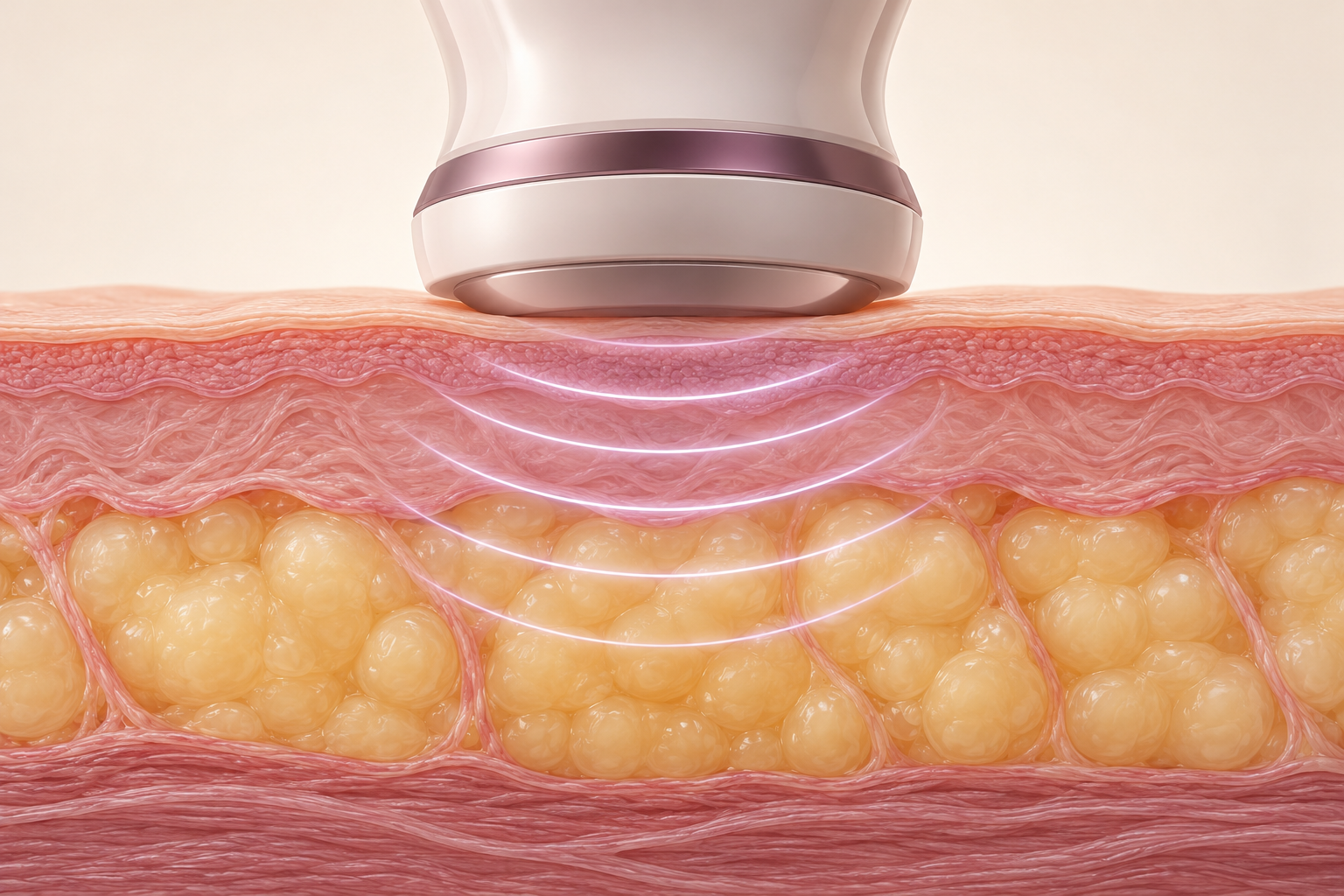
Ultrasound systems use acoustic energy. The FDA’s UltraShape record describes a particular focused system acting on subcutaneous fat for contouring at specified sites. It does not validate every device labelled “cavitation.” Focused ultrasound and any low-frequency salon device are not interchangeable categories.
Source: FDA K161952: UltraShape System
What does comparative research show?
A study of 60 participants compared ultrasound plus diet, cryolipolysis plus diet and diet alone. At two months, some local measurements improved more in the device groups, but weight and BMI did not differ significantly between groups. This was short-term research, not an assessment of every device or lasting results.
Source: Ultrasound cavitation versus cryolipolysis
Is injury possible?
One FDA report describes burns and swelling after Liposonix. An individual report cannot establish complication rates or causation in every case. Nevertheless, it reminds us that “ultrasound” does not mean risk-free; the exact model’s warnings need separate discussion.
Source: FDA MAUDE: reported burns after Liposonix
Why are centimetres not kilograms?
If an offer concerns local contour, do not automatically infer weight loss. Ask which outcome was actually measured. The starting goal, assessment time and other changes matter. Diet’s role in a study also needs to be clear: assigning a combined programme’s result entirely to the device requires additional justification.
What should we clarify about the device?
Request the model name and intended use. Ask whether the proposed system has the same design as the one studied. A frequency number or handpiece appearance alone does not establish equivalence. Clarify how your medical history will be assessed and where to obtain help after an adverse reaction. These questions should have understandable answers before you decide.