
 ქართული
 Русский
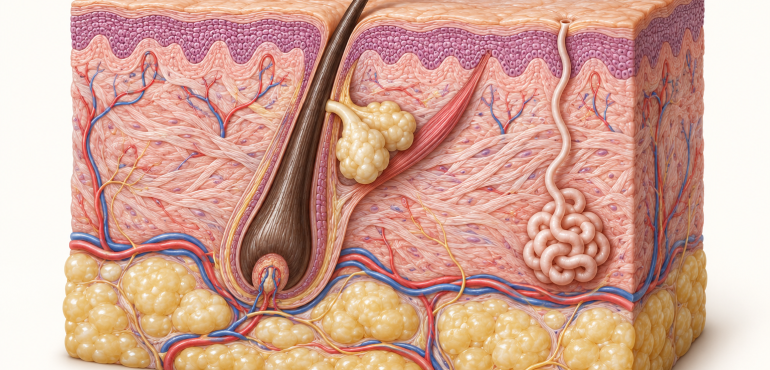
How is skin structured, and what does each layer do?
Sources reviewed: 25 October 2026.
Reading time: 2 min.
What does the skin do?
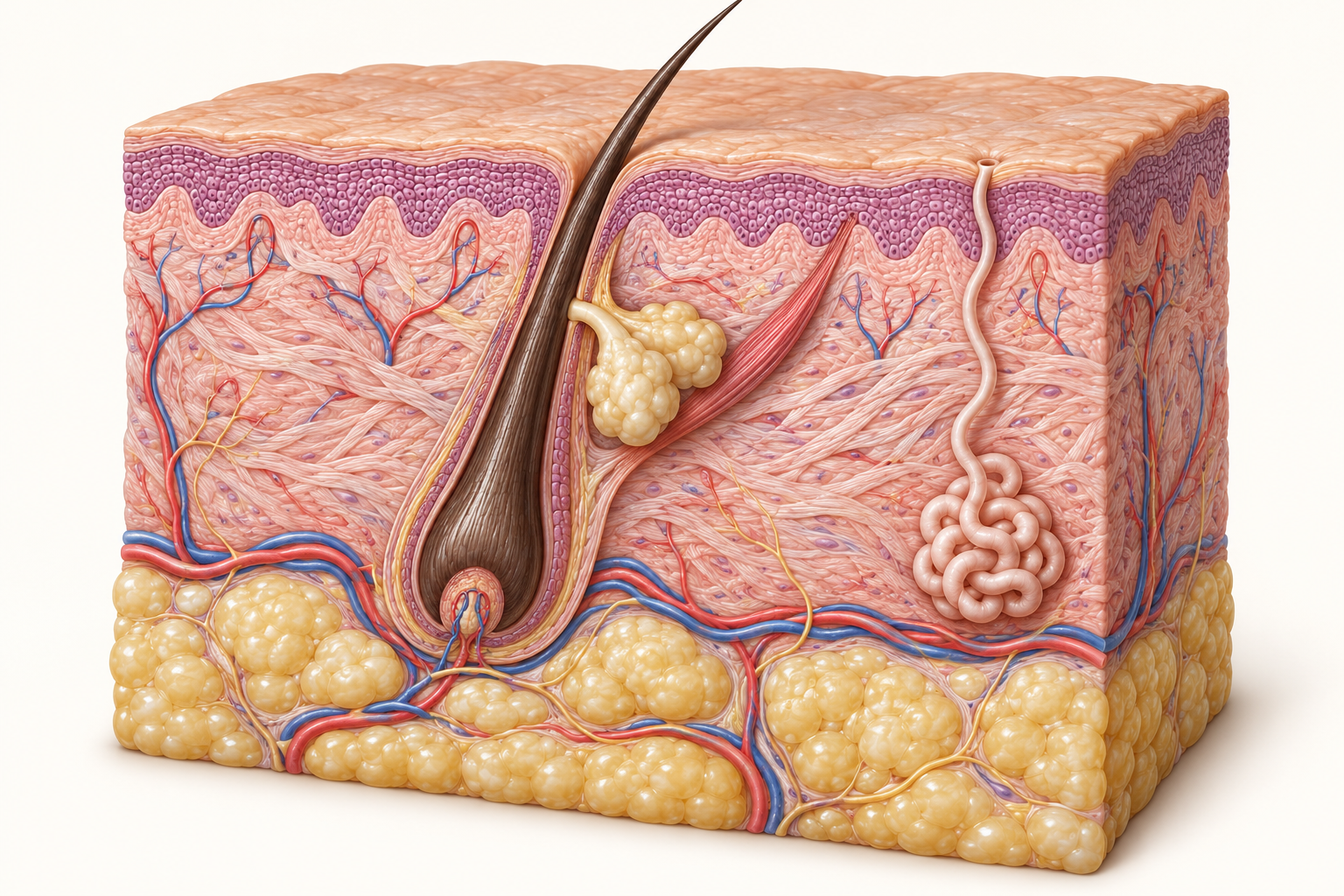
The skin protects the body, limits water loss, supports sensation and helps regulate temperature. Its two main layers are the epidermis and dermis; subcutaneous tissue lies beneath them.
Source: StatPearls — Anatomy, Skin
What does the epidermis do?
The epidermis is the outer epithelial layer. Its surface stratum corneum is an important part of the protective barrier. The epidermis has no blood vessels; the vascular network lies below it in the dermis.
The epidermis is not identical across the body. Thick skin on the palms and soles has an additional clear layer that is absent from most hair-bearing areas. Skin in different locations therefore needs to be considered in context.
Source: OpenStax — Layers of the Skin
Why does the dermis matter?
The dermis is connective tissue beneath the epidermis. It contains collagen, blood vessels, nerves, hair follicles and glands. These structures contribute to support, nourishment and sensation.
The dermis and subcutaneous fat are not the same tissue. When discussing a device’s action, clarify which tissue is involved and what outcome is expected.
Source: Johns Hopkins Medicine — Anatomy of the Skin
What is subcutaneous tissue?
The hypodermis is fat and connective tissue beneath the dermis. It is structurally distinct from the epidermis and dermis.
Source: StatPearls — Anatomy, Skin
Why does this matter when choosing a procedure?
Surface appearance, the skin barrier and deeper tissues involve different questions. “Deep action” alone does not explain the purpose of a particular device. Discuss the concern being addressed, expected benefit and potential risks with a qualified professional. Technical specifications cannot replace individual assessment.