
 ქართული
 Русский
Why is IPL not a laser?
Sources reviewed: 25 October 2026.
Reading time: 2 min.
What does IPL mean?
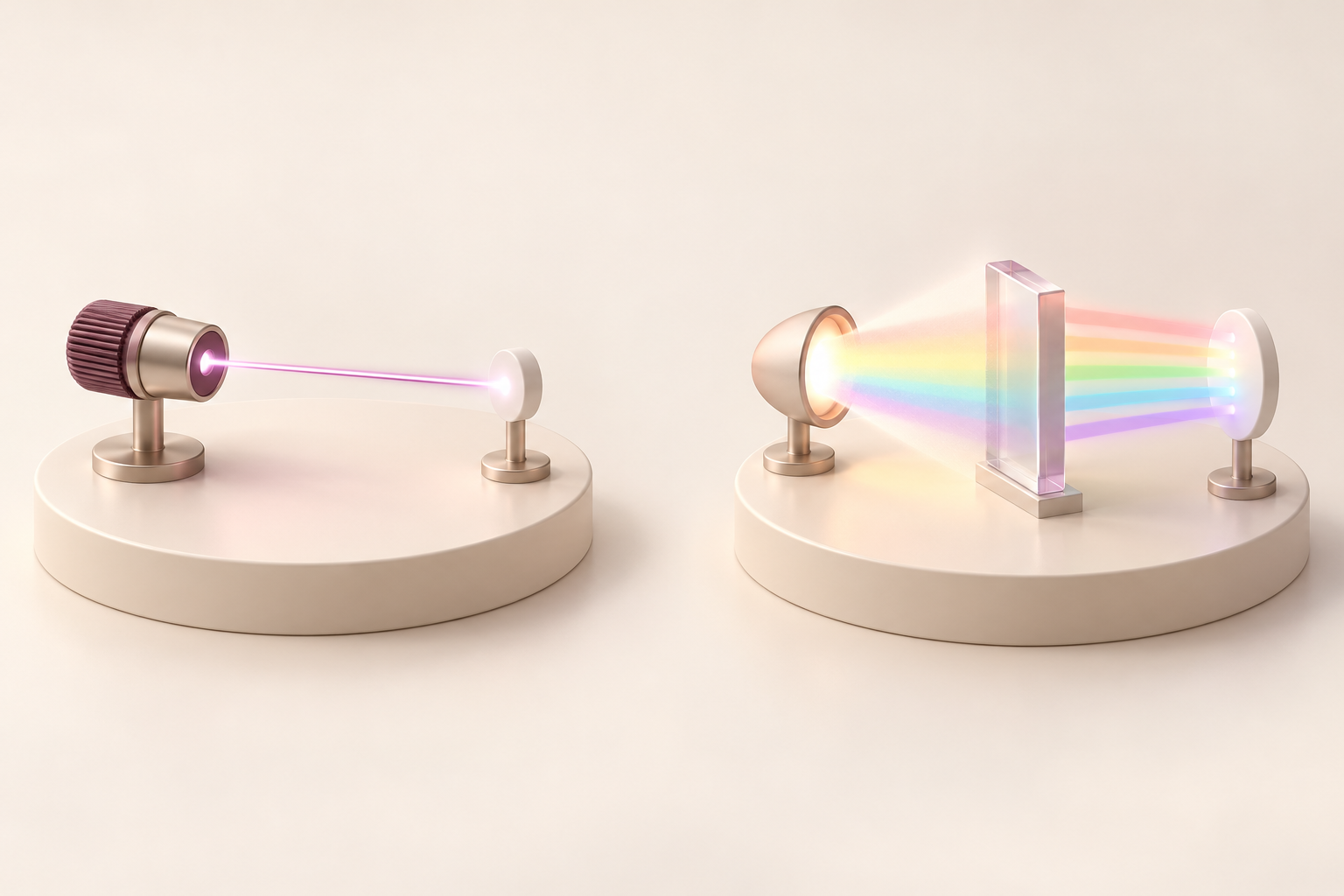
IPL means intense pulsed light. Its source produces a broad spectrum; filters select the range used. IPL is not a laser.
Source: StatPearls — Laser Hair Removal
Can IPL reduce hair?
Some IPL systems reduce hair through light–pigment interaction and heat. Skin and hair colour are part of assessment.
Source: Canadian Dermatology Association — Hair Removal & Reduction
What does comparative research show?
A 2026 randomized comparison of women’s underarms found hair reduction with IPL and diode. Later objective results favoured diode, with greater discomfort.
Source: Randomized split-body IPL versus diode study, 2026
Why do evidence limits matter?
Of 48 starting participants, 20 attended later follow-up. Phototypes I–IV were studied. Attrition and participant selection limit generalization.
Source: Randomized split-body IPL versus diode study, 2026
What risks accompany IPL?
Possible complications include burns, pigmentation changes, scarring, eye injury and paradoxical hair growth. Non-laser does not mean risk-free.
Source: Canadian Dermatology Association — Hair Removal & Reduction
Does non-laser mean safer?
Health Canada warns of thermal injury from light and other energy-based devices. Risk requires assessment for the particular use.
Source: Health Canada — Risk of thermal harm from energy-based devices
How can we prepare for an informed choice?
Ask for the exact device name and an explanation of why it suits your goal. Discuss expected benefit, management of complications and alternatives separately. A good explanation goes beyond a colourful spectrum or speed of treatment. Photographs and technical data can help, but cannot promise your personal result. Use the same questions to assess different offers.
How can we distinguish technology from a trade name?
An offer may contain many commercial terms, abbreviations or program names. Names alone do not identify the light source. Ask plainly: is this a laser, IPL or a combined system? Which exact model and handpiece are meant? Clarification does not reject the technology; it helps connect relevant evidence to the right device and avoid confusing different methods.
How should we read an outcome photograph?
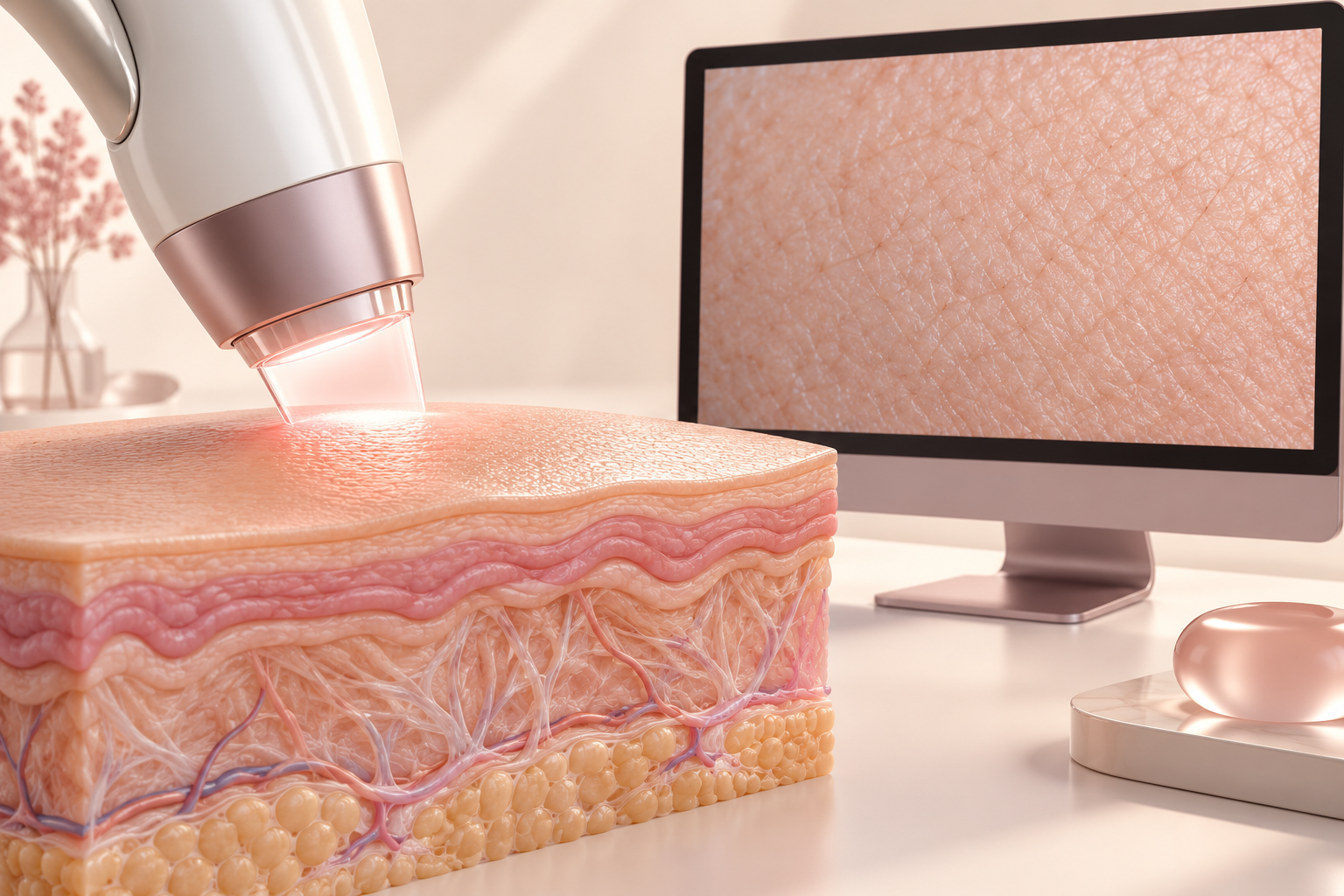
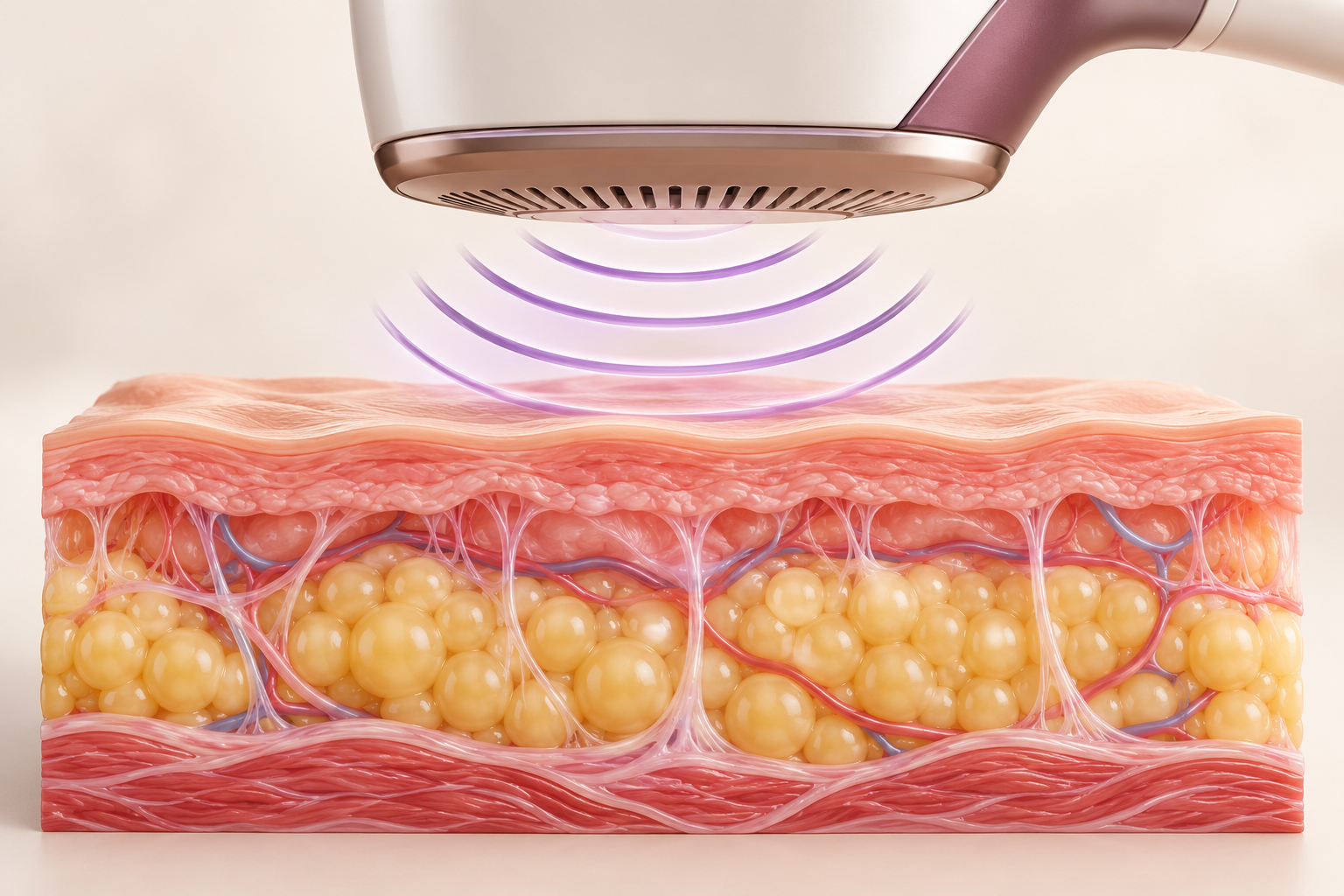
Ask when the photograph was taken, which area it shows and which outcome it illustrates. A visible change can be interesting, but one example cannot describe every participant in a study. A selected case and systematic group assessment are different kinds of information. The 3D image here has another purpose: explaining light-source differences. It is not a treatment-result photograph or proof that a particular device succeeds.
What is the key point to remember?
Separate three questions: how the light is produced, what the specific device is intended to do and who may be suitable for a procedure. The first is technological; the second needs documentation; the third needs individual assessment. A good answer to one does not automatically answer the other two.